¶ 1. What are supports in 3D printing?
Fused deposition modeling (FDM) extrudes a filament onto a build surface along a predetermined path. As the material is extruded, it cools, forming a solid surface that provides the foundation for the next layer of material.
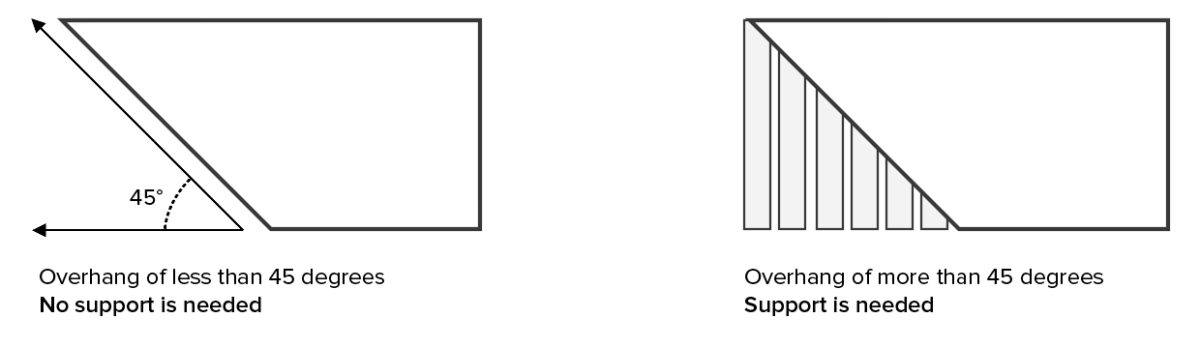
With FDM printing, each layer is printed as a set of heated filament threads which adhere to the threads below and around it. Each thread is printed slightly offset from its previous layer, allowing a model to be built up to angles of 45 degrees. This way, prints can expand beyond the width of preceding layers of filament.
When a feature is printed with an overhang beyond 45 degrees, it can sag enough to potentially ruin the print. This is when you need support structures.
¶ 2. When do you need support structures?
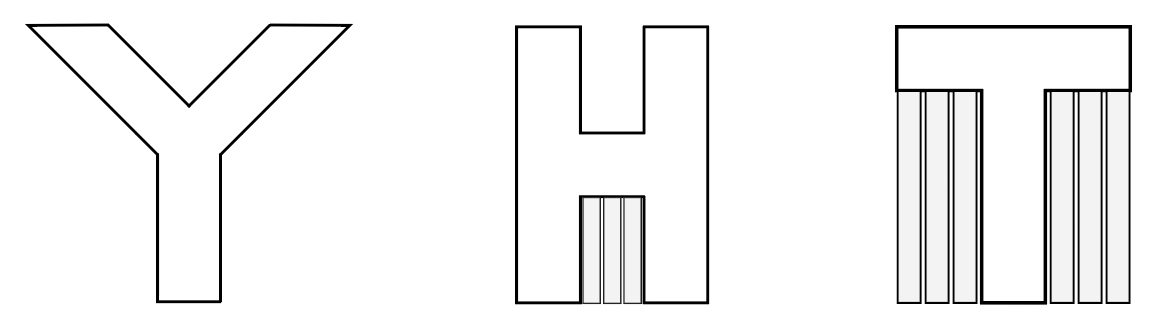
Let’s imagine you have to 3D print models of the letters Y, H and T.
An FDM printer can easily print the arms of the letter Y without requiring support structures. Even though these features are outstretched, they don’t extend past 45 degrees.
The letter H, on the other hand, is a bit more complicated. If the center bridge is under 5 mm, it can be printed without support or any sagging. Support is required if the bridge exceeds 5 mm. In the example shown here, the center bridge is over 5 mm, so it’s printed with support structures.
The letter T requires support for the top features extending from either side of the model. There is nothing for these outer arms to be printed on and the material will fall down without supports.
The image below illustrates these three examples. The support material is shown in light gray.
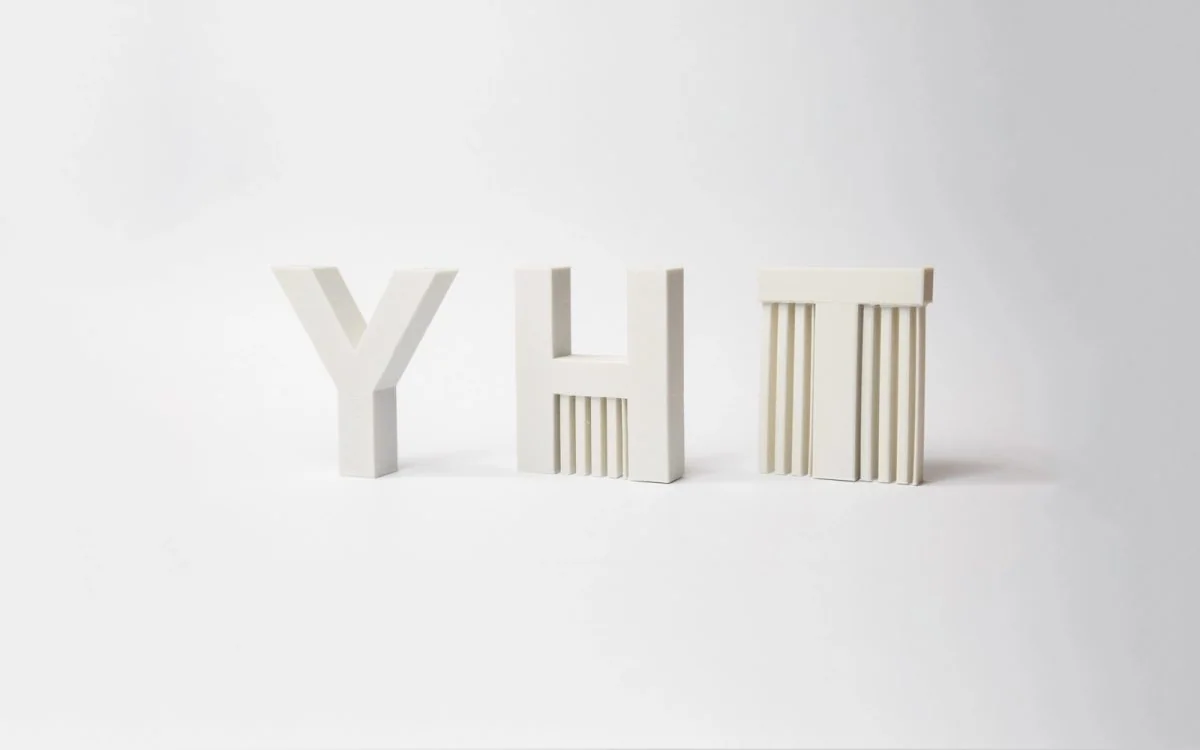
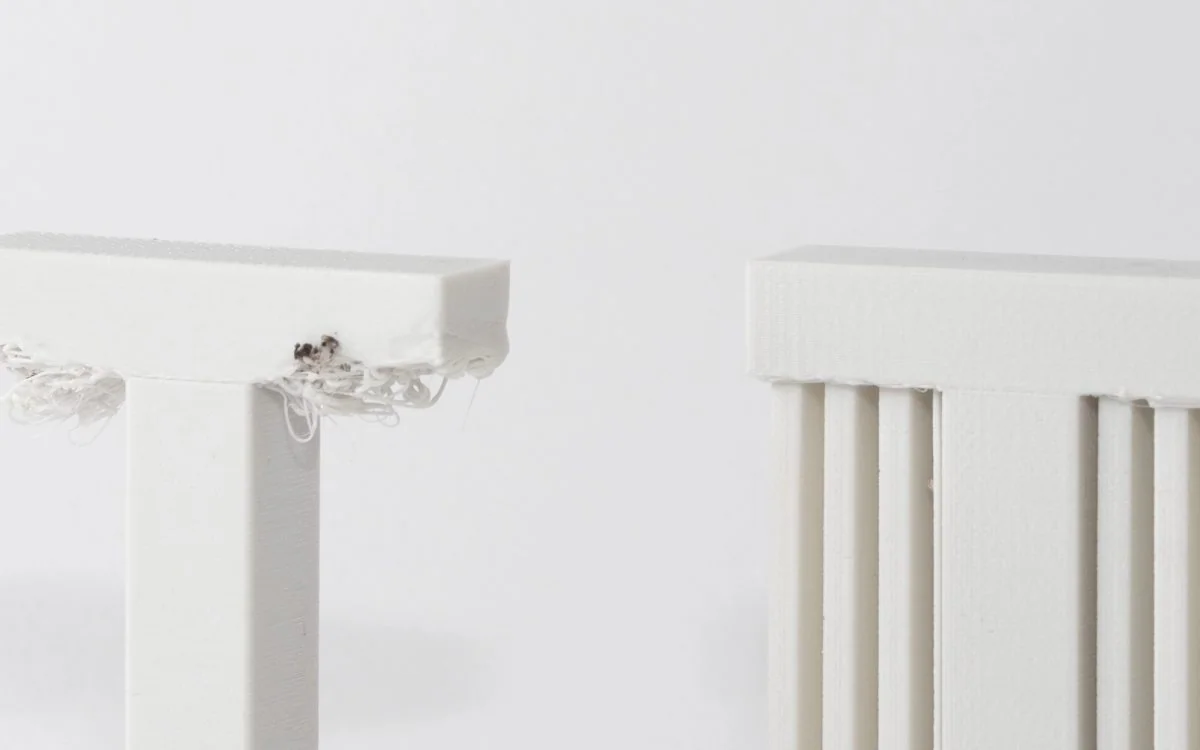
Here is how these models look when 3D printed. ↓
The second image shows the result of the T printed without support. ↓
The surface has significant sagging and will require a lot of post-processing to clean up. ↓
|
|
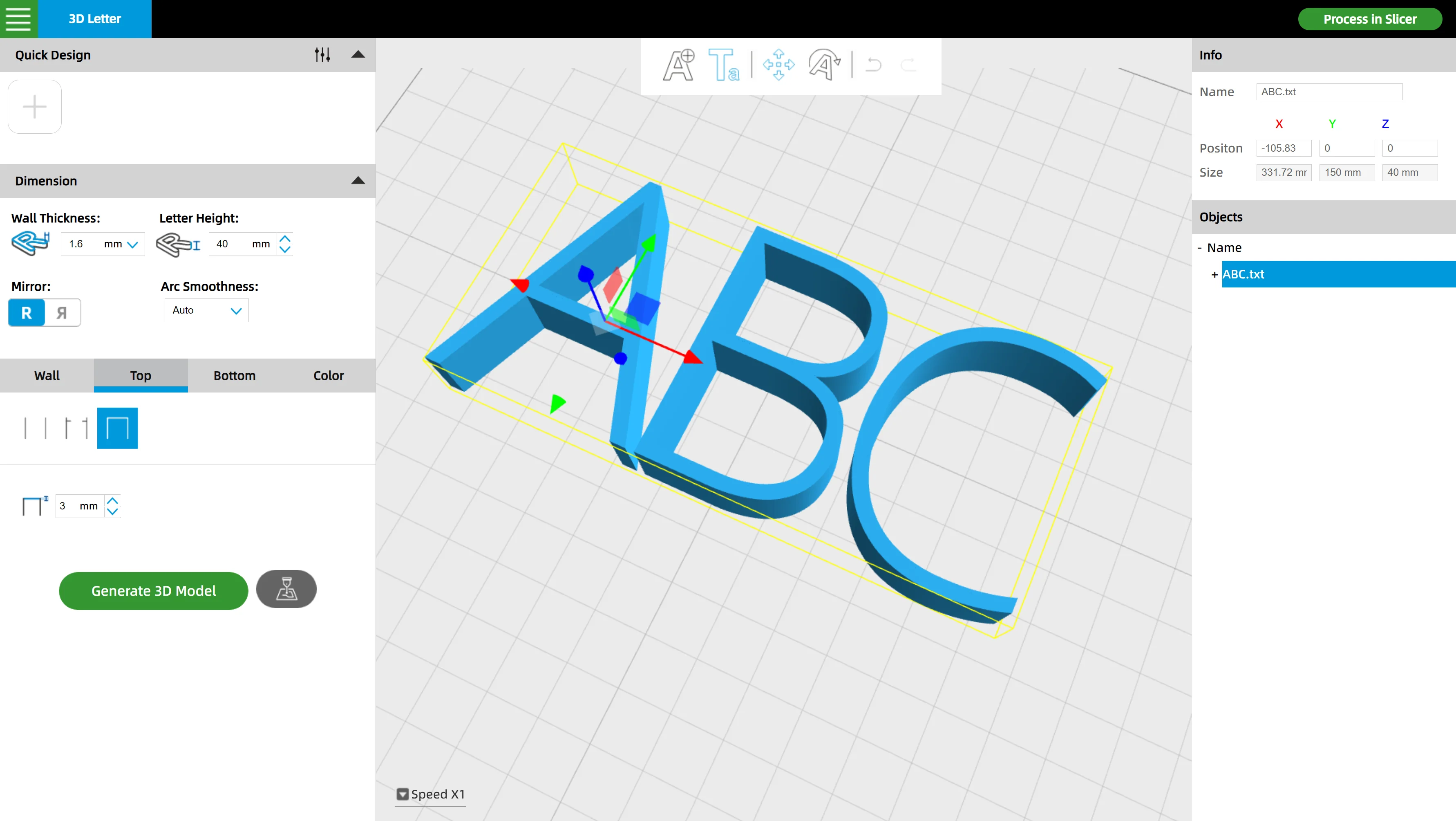
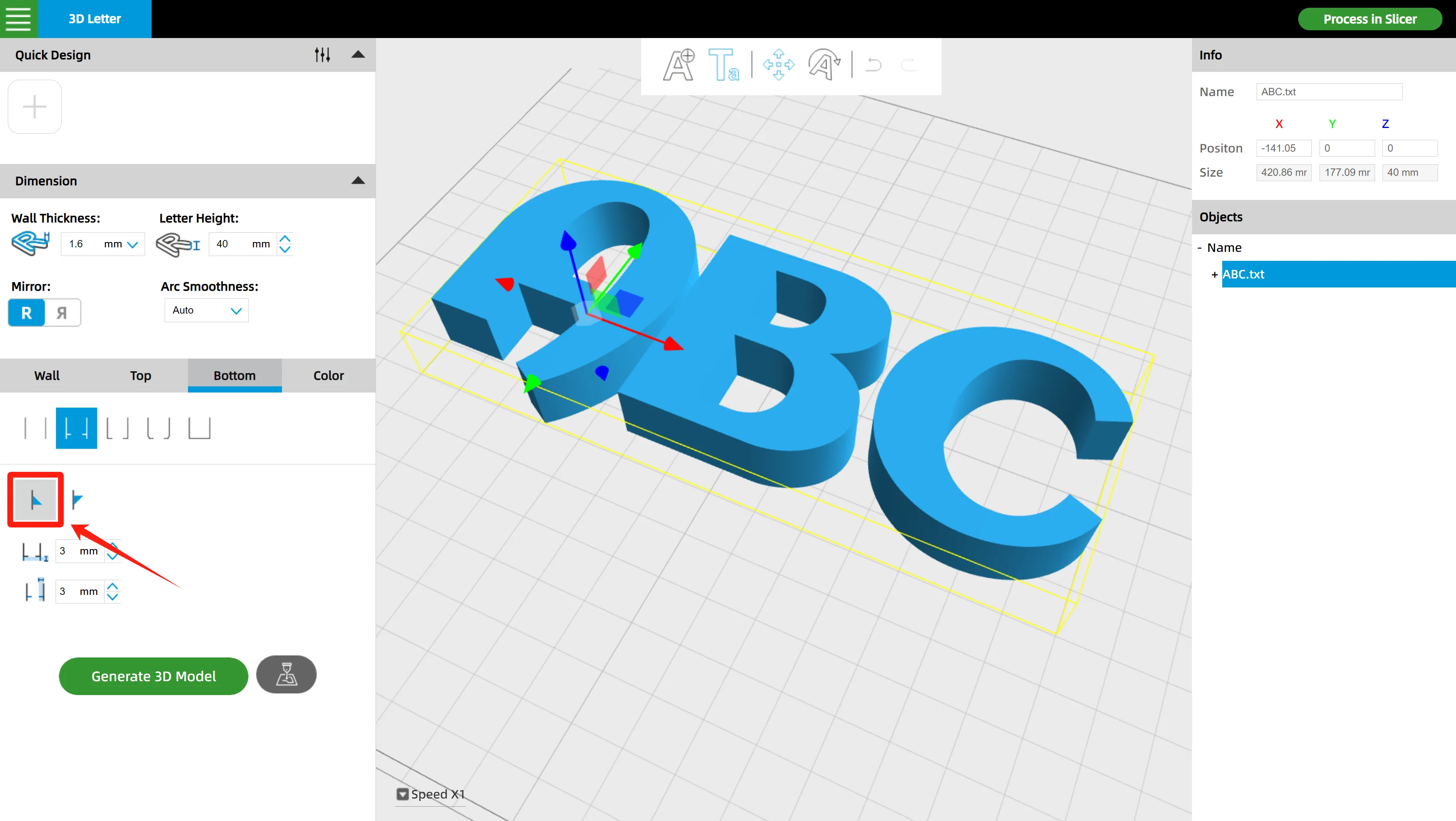
In SoliFuse 3D printing solution, there are only two design options that will need support structures. ↓
¶ 2.1 Facing down slot option
¶ 2.2 Enclosed top surface option
The "enclosed top surface" option in the "Top" section is also a support structure needed design option.
¶ 3. What are the disadvantages of support structures?
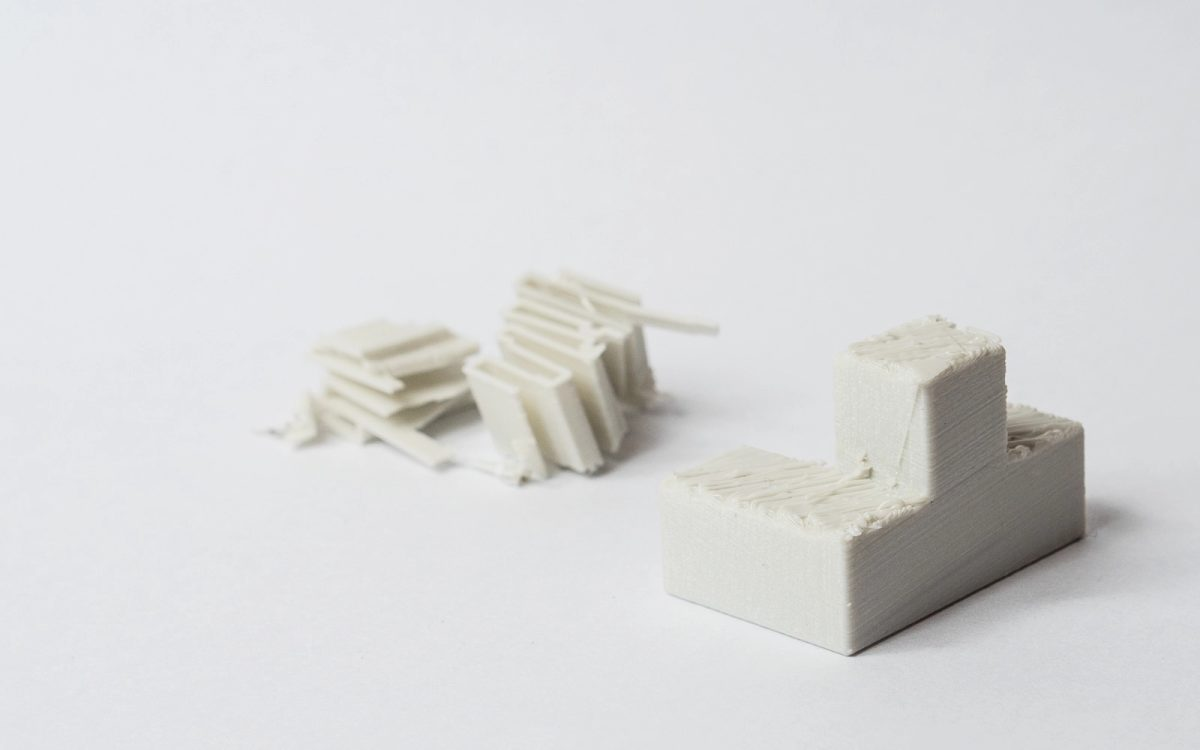
The potential need to use support structures is one reason why FDM is not always the right technology for your application. One of the limitations of using supports in FDM printing is that post-processing is then required, which results in marks or damage to the surface in contact with the support materials.
Another issue is that layers printed on support structures will be less even because the supports won’t be stationary like solid layers of extruded filament. On top of this, supports can be difficult to remove from small, intricate features. This bit of post-processing could break your model.
Furthermore, having to print support structures adds to the cost of FDM. Supports require additional printing material that later needs to be removed, creating more work (and waste) for the operator. More materials and more human intervention equal higher costs.
¶ 4. How to avoid support structures?
¶ 4.1 Use facing up slot option
Unless you need a particularly wide slot, otherwise, we recommend you replace this option with the facing up slot option (showing in the red box). ↓
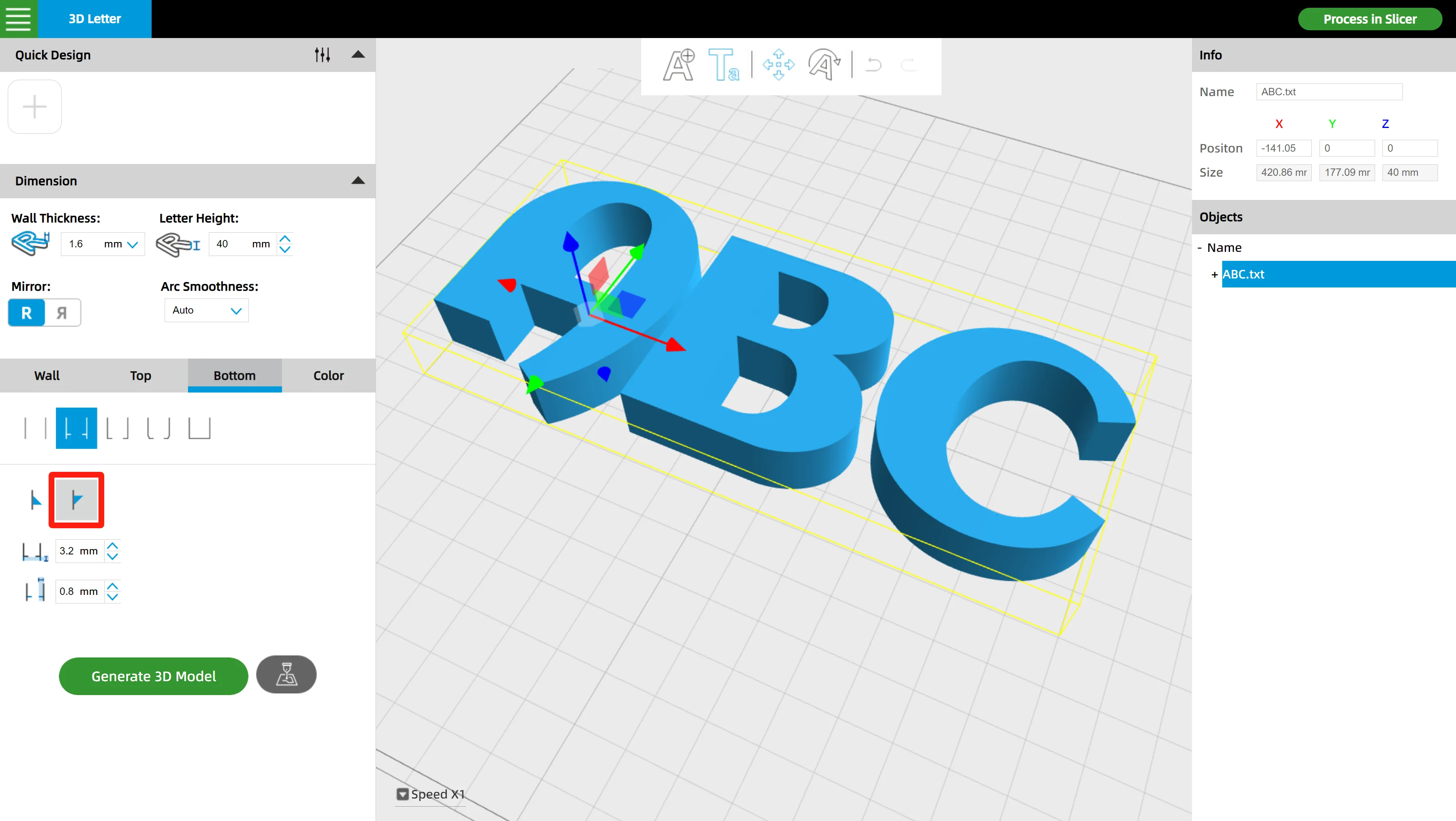
With this option, you don't need to generate support structure for the slot.
¶ 4.2 Use enclosed top surface option only when 3D printing narrow letters
According to the knowledge above, short bridging is available when the bridging width is short.
So we suggest you choose the enclosed top surface option only when you 3D print very thin (very narrow width) letters.